
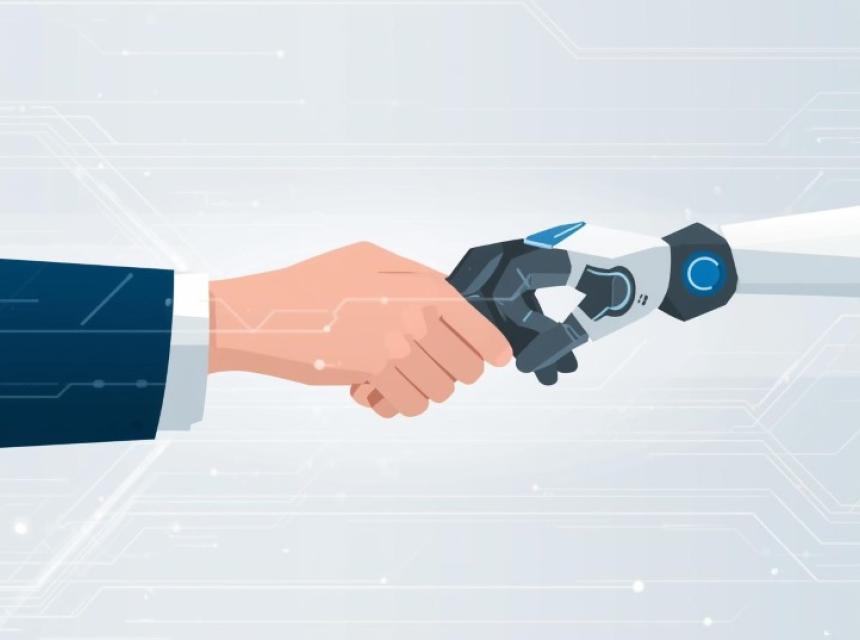
The Human Element in AI: Why Keeping People in the Loop Isn't Optional – It's Strategic
How organizations achieve better outcomes by designing AI systems that amplify human judgment rather than replace it
Artificial intelligence (AI) and machine learning (ML) have moved from buzzwords to business imperatives. Organizations across federal and enterprise sectors are leveraging AI to enhance their digital presence, streamline operations, and deliver superior user experiences. The promise is compelling: faster decisions, cost optimization, predictive insights, and 24/7 automation that scales beyond human capacity.
But here's the paradox that's emerging as AI systems mature: the most successful implementations aren't the ones that remove humans from the equation. They're the ones that strategically position humans exactly where their judgment matters most.
The AI Transformation is Real…. and So Are the Stakes
AI and ML are fundamentally reshaping how organizations interact with their stakeholders. From intelligent chatbots that provide instant citizen services to predictive analytics that anticipate system failures before they occur, AI-powered solutions are elevating digital experiences in measurable ways.
Here are two great examples: Federal agencies can use AI to process millions of benefits claims faster and more accurately; Enterprise organizations can use ML algorithms topersonalize customer journeys at scale, delivering relevant content and services to the right people at the right time.
The impact on digital presence is undeniable. Organizations implementing AI thoughtfully are seeing:
- Enhanced accessibility and responsiveness across digital channels
- Personalized experiences that adapt to individual user needs
- Proactive problem resolution through predictive capabilities
- Data-driven insights that inform strategic decisions
- Operational efficiency that frees human talent for higher-value work
- Company optimization of resources to help manage costs
Yet with these powerful capabilities comes a critical question: How do we ensure AI systems serve our missions rather than automate them?
The Human-in-the-Loop Imperative
Human-in-the-loop (HITL) AI isn't about a lack of confidence in technology. It's about recognizing that the most sophisticated AI systems still lack the contextual understanding, ethical reasoning, and adaptability that humans bring to complex decisions.
Consider these scenarios:
- In cybersecurity, an AI system might flag thousands of potential threats daily. A human analyst doesn't just review alerts; they understand organizational context, recognize patterns that span multiple systems, and make judgment calls about acceptable risk based on mission priorities.
- In customer experience, an AI can route inquiries and provide instant responses. But when a veteran contacts the VA about a denied claim or a citizen faces a complex regulatory question, the empathy and nuanced problem-solving of a trained specialist becomes irreplaceable.
- In data analytics, ML models can identify correlations in massive datasets. But human experts determine which insights are actionable, which patterns reflect genuine opportunities versus statistical noise, and how findings align with strategic objectives.
The organizations achieving breakthrough results with AI aren't choosing between human intelligence and artificial intelligence. They're architecting systems where each amplifies the other.
The AdaptiveStack Approach: Mission-Focused AI
At AdaptiveStack Technologies, we engineer AI and ML solutions with human-in-the-loop principles embedded from the start. Our experience with government systems, where accuracy, accountability, and mission success are non-negotiable, has taught us that the most powerful AI serves human decision-makers, not supplants them.
We design solutions where:
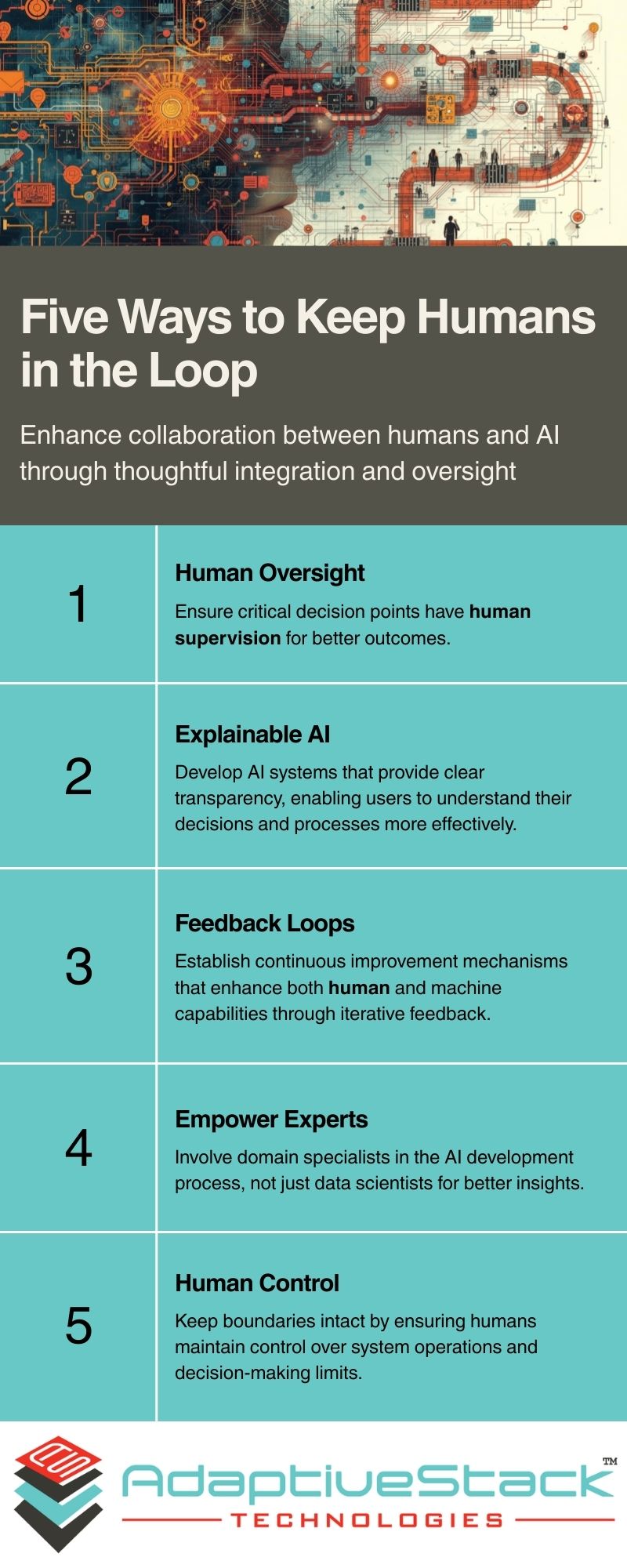
- Transparency is built in, not bolted on – users understand how AI reaches recommendations
- Human expertise is amplified, not automated away – AI handles scale while humans provide judgment
- Feedback loops are continuous –human operators and AI models improve through interaction
- Mission objectives drive optimization – not just technical metrics
Whether modernizing legacy systems, implementing intelligent automation, or building predictive analytics capabilities, we architect solutions that recognize technology serves people, not the other way around.
The Future is Human-AI Partnership
As AI capabilities expand, the temptation to remove humans from processes will grow. Organizations that resist this temptation, that instead thoughtfully position humans in the loop where judgment, context, and ethical reasoning matter most, will achieve better outcomes.
They'll build more resilient systems that adapt to unexpected situations. They'll maintain stakeholder trust through transparent, accountable decision-making. And they'll create digital experiences that feel responsive and human, even when powered by sophisticated automation.
The question isn't whether to implement AI. It's about implementing AI in ways that enhance, rather than diminish, the human elements that make missions successful.
At AdaptiveStack Technologies, we believe the future of digital transformation lies not in choosing between human and artificial intelligence, but in architecting systems that enable both to thrive.
Ready to explore how human-in-the-loop AI can enhance your digital presence and mission outcomes? Contact our team to discuss your modernization goals.
AdaptiveStack Technologies delivers mission-focused AI and ML solutions for federal and enterprise organizations. Our adaptive approach ensures technology serves your objectiveswhile maintaining the human judgment that drives mission success.